Is Almond Cow Worth the Money? – Everything You Need to Know
Contents
- What is Almond Cow?
- What are the benefits of plant-based milk?
- But what about my calcium?
- So now we know the health and environmental benefits of plant-based milk in general. There are also benefits to making your own plant-based milk at home!
- With Almond Cow You Can Use the Pulp Too!
- Are you sold yet? Here’s everything you need to know about purchasing your Almond Cow!
- How does it work?
- 1. Add liquid
- 2. Add ingredients
- 3. Attach and press
- 4. Pour and enjoy!
- How much is an Almond Cow?
- Conclusion
- Almond Cow is a good investment if you drink plant-based milk often and want fresher, additive-free milk with no added sugar. If you rely on milk for calcium, pair homemade milk with other calcium sources.
- Sources
Have you ever wondered how on earth people milk almonds? Do you want to enjoy the fresh taste of homemade almond milk? Have you ever wanted to experiment with making unique plant-powered drinks? Then an “Almond Cow” might be for you.
What is Almond Cow?
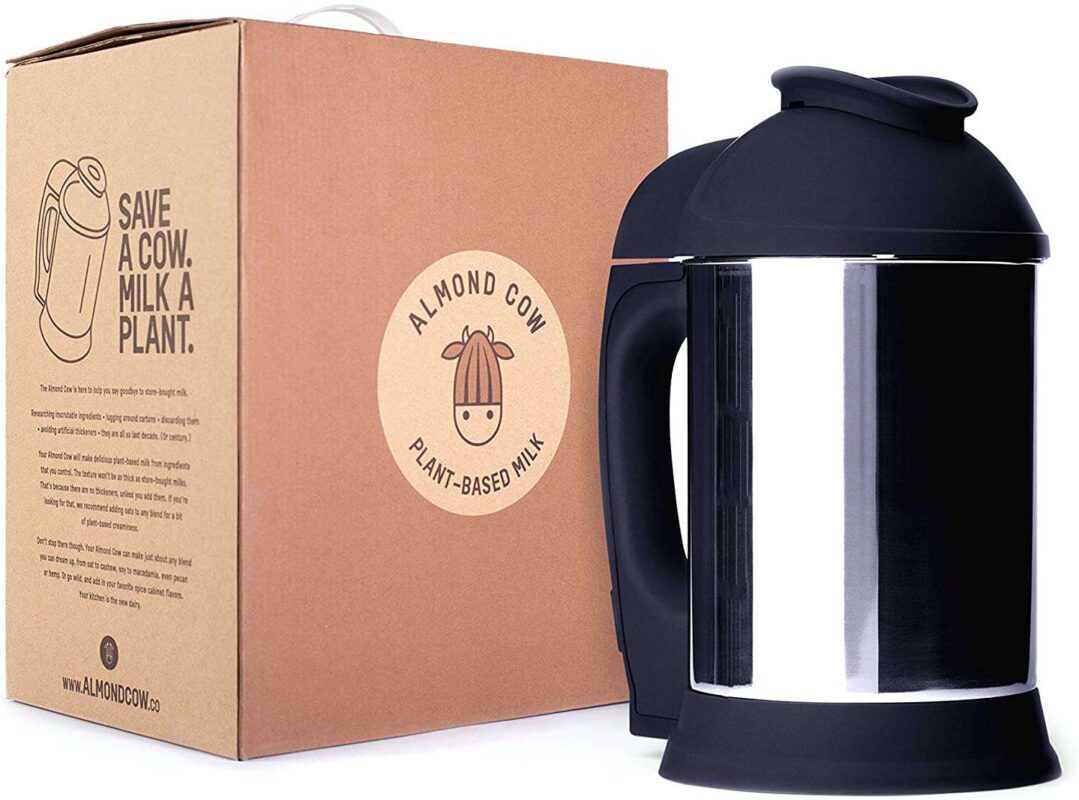
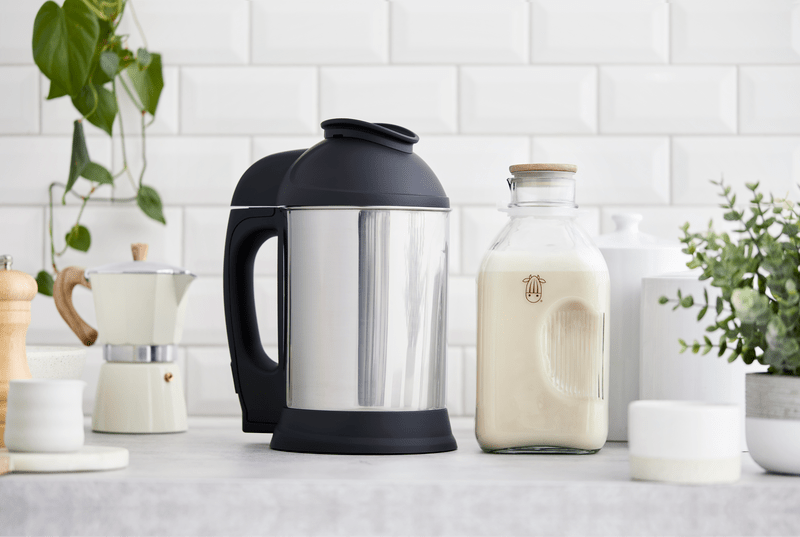
The Almond Cow is a countertop device, about the size of a coffee maker, that automatically separates the pulp from the milk! According to the company, you get a fresh batch of milk that’s ready to drink in about a minute.
Is Almond Cow Worth The Money? Outlined below are more details to help you decide for yourself!
What are the benefits of plant-based milk?
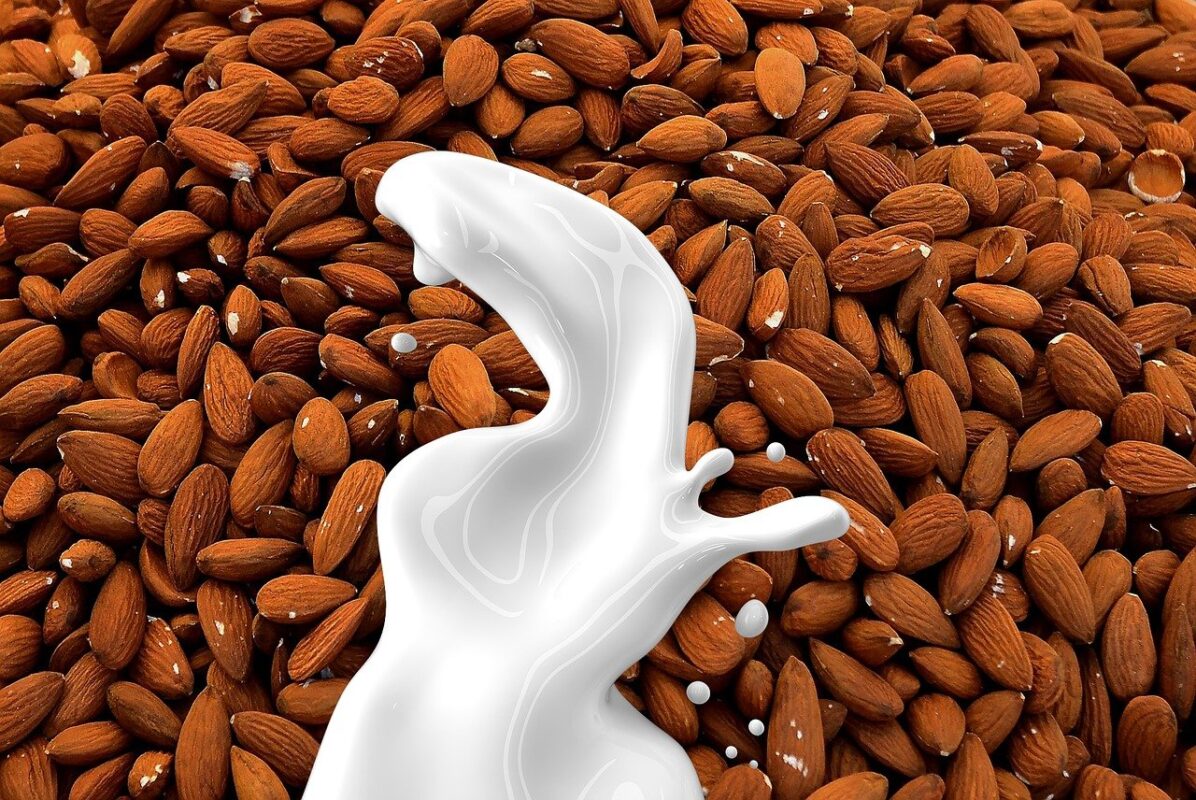
Well, for starters, plant-based milk is a good substitute for dairy if you avoid dairy or prefer the taste. According to Annie Fenn, M.D., “Nut milk is delicious and nutritious, which is reason enough to incorporate it into your diet. Milk made from almonds, cashews, hazelnuts, and pecans, for example, are rich in antioxidants, such as vitamin E, and provide a brain-friendly supply of mono- and poly-unsaturated fats.”
But what about my calcium?
This is where homemade milk falls short. Dairy milk is naturally rich in calcium, and many store-bought plant milks are fortified with calcium to match it.
Homemade almond milk is not fortified, so it has far less calcium than dairy or fortified store-bought milk. MedlinePlus' guide to calcium in your diet lists fortified products, leafy greens, and canned fish with bones as good sources if you eat little dairy.
There are also environmental factors that have contributed to the widespread craze of the plant-based milk substitution as we become more aware of the footprint it makes on our planet. According to Hannah Ritchie, “Cow’s milk has significantly higher impacts than the plant-based alternatives across all metrics. It causes around three times as much greenhouse gas emissions; uses around ten times as much land, and two to twenty times as much freshwater…”
So now we know the health and environmental benefits of plant-based milk in general. There are also benefits to making your own plant-based milk at home!
Store-bought plant-based milk has the convenience of just picking up a carton and being done. But many store brands are mostly water, with a small share of nuts plus thickeners and other additives.
When you make your own, you control the ingredients. You can use more nuts per cup for a creamier, richer milk, and you can skip the additives.
You also control the sugar. Sweetened store-bought almond milks contain added sugar, while unsweetened versions have none. The CDC's added sugars facts note that no amount of added sugar is recommended as part of a healthy diet.
With Almond Cow You Can Use the Pulp Too!
Almond Cow not only offers recipes for your plant-based beverages but also for the leftover pulp.
Are you sold yet? Here’s everything you need to know about purchasing your Almond Cow!
How does it work?
1. Add liquid
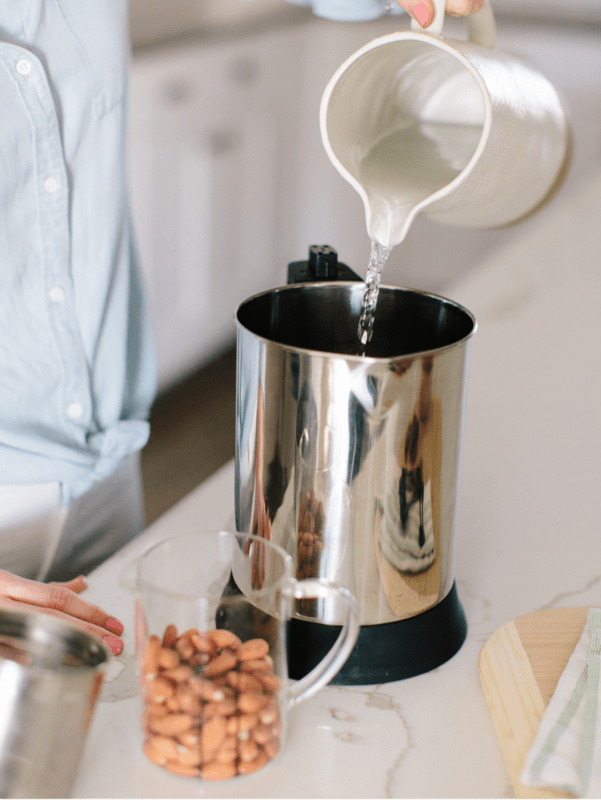
Start with water or get creative with tea or coffee. Don’t stop there though! Use lemonade or juice for a unique infusion of flavor.
2. Add ingredients

Keep it simple with one ingredient or mix it up with multiple. From nuts, seeds, or grains to fruits, greens, and leaves.
3. Attach and press
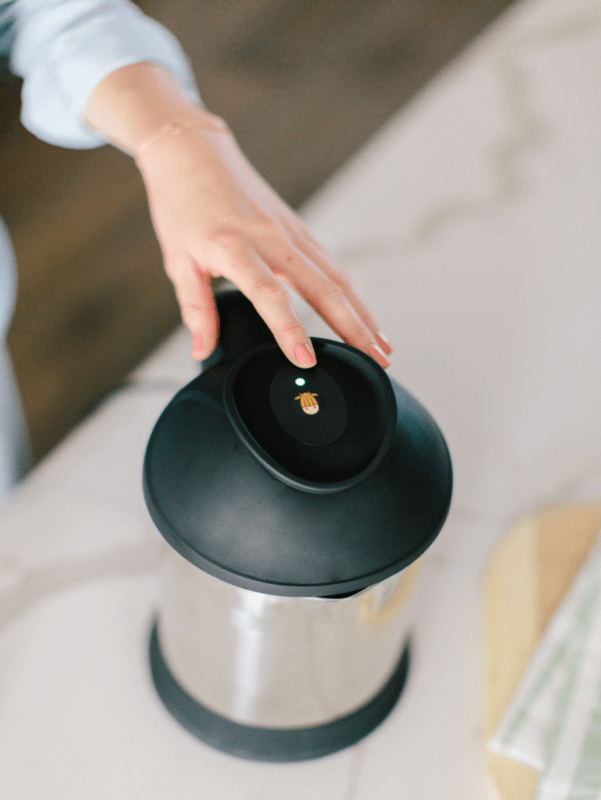
Attach the filter basket to the top. And the top to the base. Press the cow and in about a minute, your plant-based creation is ready to enjoy!
4. Pour and enjoy!
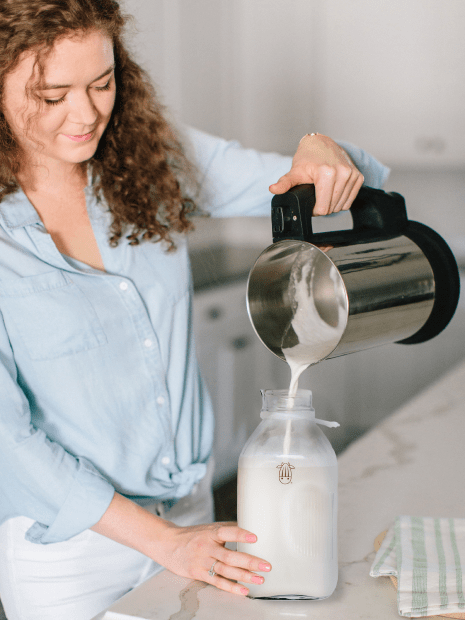
Once finished, remove the top and set it in the collector cup. Fill your jug and enjoy! Do a quick rinse of the base, top, and basket and you’re done!
Homemade nut milk has no preservatives, so keep it in the fridge and use it within a few days.
How much is an Almond Cow?
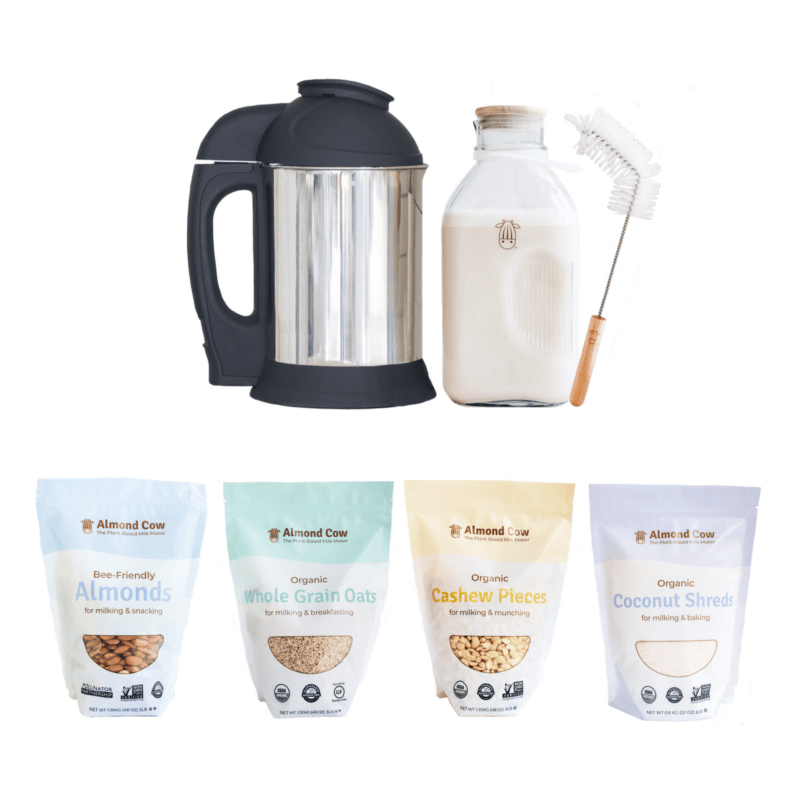
When we first wrote this review, the Almond Cow by itself was $195. The website also had a Starter Set for $292.70. Prices change, so check the current price before you buy.
The Starter Set came with: Almond Cow Plant-Based Milk Maker, a glass jug, a jug brush, bulk organic coconut shreds (2 lbs), bulk organic cashew pieces (3 lbs), bulk bee-friendly almonds (3 lbs), and bulk organic whole grain oats (3 lbs).
Conclusion
Almond Cow is a good investment if you drink plant-based milk often and want fresher, additive-free milk with no added sugar. If you rely on milk for calcium, pair homemade milk with other calcium sources.
Sources
- Calcium in diet, MedlinePlus
- Get the Facts: Added Sugars, CDC