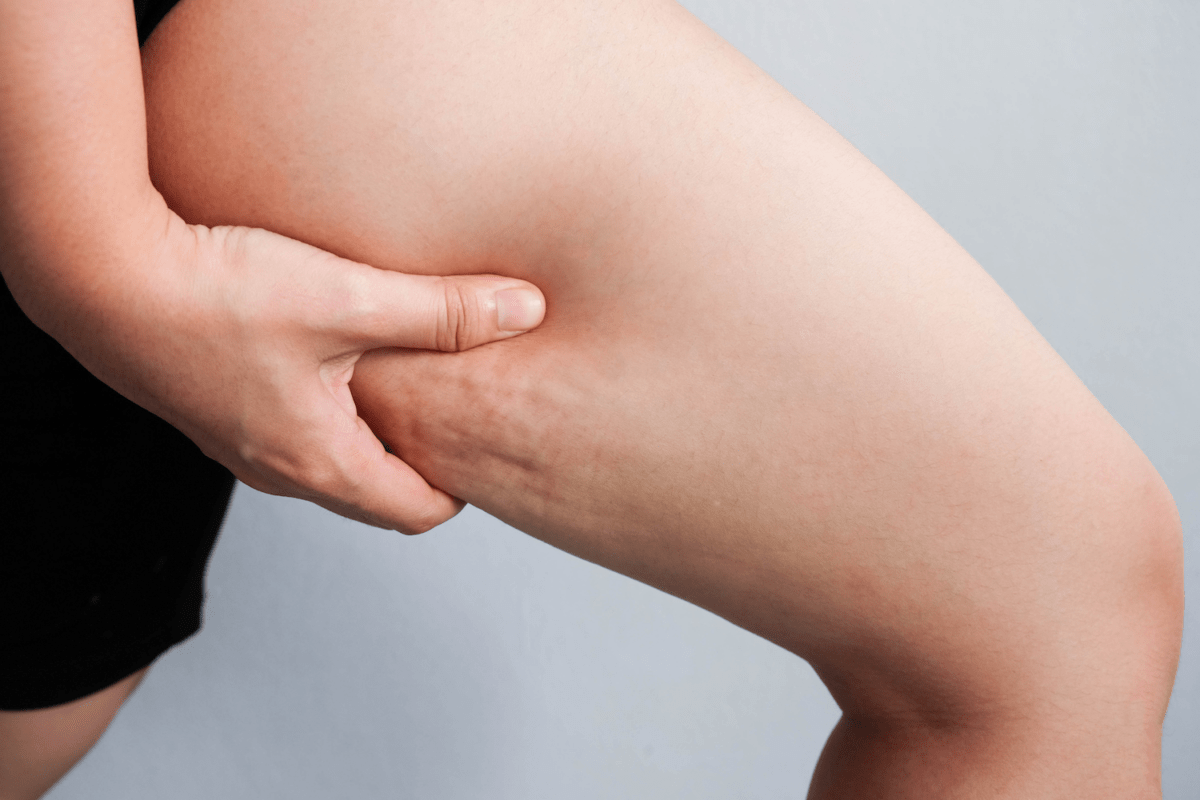
How To Avoid Getting Stretch Marks When Working Out
Contents
Stretch marks are long, narrow streaks or stripes that occur when the skin is stretched too quickly. Pregnancy, puberty, rapid weight gain or loss, and fast muscle growth can all cause stretch marks. Are you able to avoid stretch marks while working out?
Not always. Genetics play a big role, and the NHS page on stretch marks notes they can't always be prevented. In today’s article, I will show you how to lower your chances of getting stretch marks and what actually helps once they appear.
How To Avoid Getting Stretch Marks When Working Out
Preventing Stretch Marks From Appearing
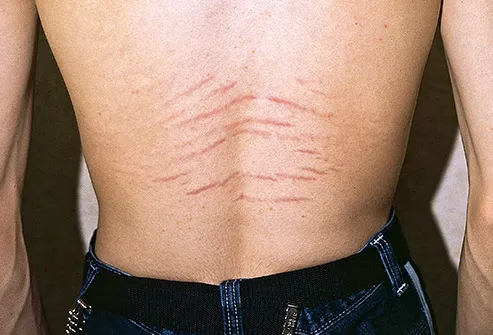
To start, keeping your weight changes gradual is the best way to lower the chance of stretch marks appearing in the first place. Rapid weight loss can cause them, but so can rapid weight gain.
If you are trying to gain muscle, you can lower your risk by bulking slowly so your skin has time to adjust. According to Healthline,
“Stretch marks sometimes appear when you rapidly gain or lose weight. Teenagers may also notice stretch marks after a sudden growth spurt.”
Weight control is one of the ways to lower your risk of stretch marks. Whether you are cutting or bulking, slow and steady changes are easier on your skin than fast ones. Lifters often notice them first on the shoulders, chest, and arms during a fast bulk.
Some steroid creams and tablets also raise the risk. That is one more reason to stay away from anabolic steroids.
A Better Method?
Many people rub coconut oil on their stretch marks. It won’t get rid of them, and there is little evidence it prevents them, but it is a gentle moisturizer. According to Healthline,
“Coconut oil has been studied for its healing properties and was found in rats to reduce the time it takes for skin wounds to heal. Applying virgin coconut oil to your stretch marks each day might take away some of their red appearance. Unless you’re allergic to coconuts, this oil is considered safe.”
Keep in mind that the healing research mentioned there was done in rats, not on human stretch marks. Skip coconut oil if you are allergic to coconut, since it can irritate your skin.
Is there Hope?
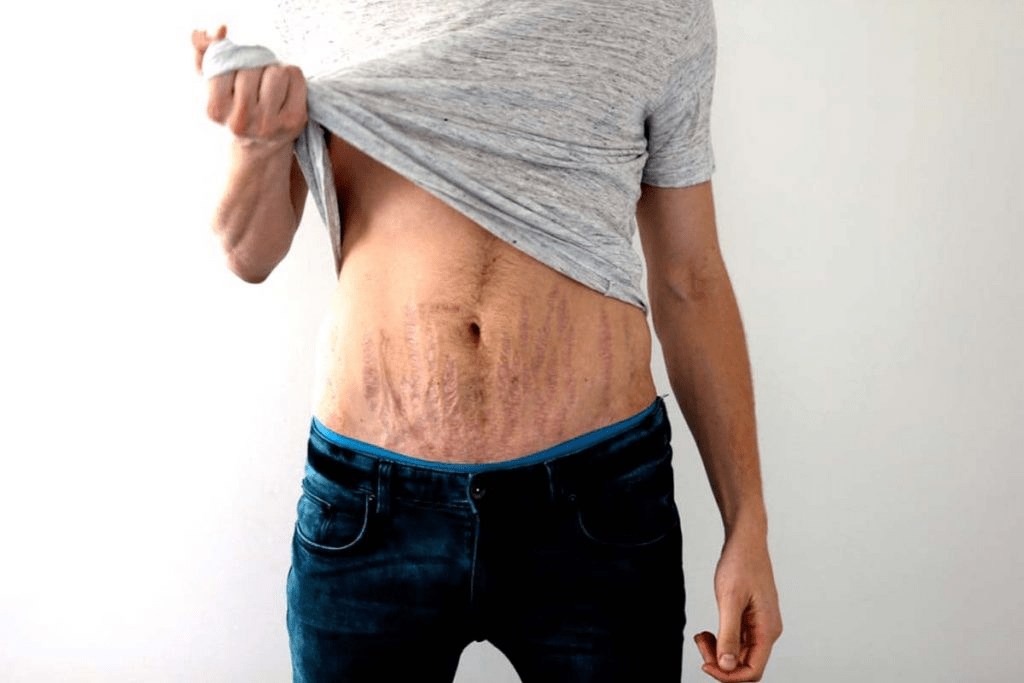
Some people use sugar as a homemade scrub on their stretch marks. The idea is to copy microdermabrasion, a treatment done in a clinic. According to Healthline,
“Some people swear by sugar as a naturopathic microdermabrasion method. Microdermabrasion performed by a dermatologist is one of the few clinically proven methods to make stretch marks fade. So this home remedy seems worth a try.”
A sugar scrub is not the same as professional microdermabrasion, and there is no good evidence that it works. If you try it, scrub gently, and don’t expect results in a few days.
Vitamins are the Key?

Vitamin A is referred to as a retinoid. Retinoids make skin appear smoother and more youthful. Prescription retinoid creams such as tretinoin may help newer stretch marks look less noticeable. According to Healthline,
“Vitamin A is referred to as a retinoid. Retinoids make skin appear smoother and more youthful. They’re used in many over-the-counter topical cosmetic creams. Simply using a topical extract of vitamin A, or taking vitamin A orally, can contribute to your skin’s health and overall appearance. A diet rich in certain foods, such as carrots and sweet potatoes, might also help you increase your vitamin A levels.”
The evidence is for creams on the skin, not pills. Don’t take extra vitamin A supplements to treat stretch marks.
Preformed vitamin A builds up in your body, and MedlinePlus warns that too much vitamin A can cause serious health problems and birth defects. Retinoid creams should not be used during pregnancy either. Getting vitamin A from foods like carrots and sweet potatoes is fine.
More than One Way
Aloe vera is a popular plant for soothing skin. It has not been clinically proven to treat stretch marks, but it can soften your skin. According to Healthline,
“While little clinical evidence exists for aloe vera as a stretch mark cure, pure aloe vera is both a natural healing agent and a skin softener. This makes it an ideal home remedy to try for stretch marks. Apply pure aloe vera from a plant to your stretch marks daily after your shower”
Aloe vera is a low-risk home remedy for most people. Just don’t expect it to make stretch marks clear up after a couple of days.
Acid Helps the Body?
Hyaluronic acid is a gooey substance your body makes naturally, mostly in your skin, joints, and eyes. It holds water, which helps keep skin hydrated and flexible.
It is also a common ingredient in skin creams and serums. Applied to the skin, it may help newer stretch marks look less noticeable.
Hyaluronic acid won’t remove stretch marks, but it is one of the few creams with some evidence behind it for early marks.
Conclusion
In conclusion, no cream, oil, or home remedy can erase stretch marks. Most fade over time and become less noticeable on their own.
The best prevention is slow, steady weight change, whether you are bulking or cutting. For marks that bother you, talk to a dermatologist about options like prescription retinoids, microdermabrasion, or laser treatments. Thank you for reading this article today.
Sources
- Stretch marks, NHS
- Vitamin A, MedlinePlus
- Hyaluronic Acid: What It Is, Benefits, How To Use & Side Effects, Cleveland Clinic