How Long Does a Pump Last After a Workout?
Contents
- What is a Muscle Pump?
- How Long Does a Pump Last After Working Out?
- 1. The Amount of Carbs Consumed
- 2. Your Body’s Hydration Level
- 3. Type of Exercise
- Why Doesn’t the Pump Last Longer?
- Why Do I Always Lose the Pump Fast?
- How Can I Make My Muscle Pump Last Longer?
- 1. Incorporate Isolation Exercises
- 2. Do More Reps and Sets of Isolation Workouts.
- 3. Vary Your Workout Selections.
- 4. Increase the Pace of Your Routine.
- 5. Use Drop Sets
- 6. Use Supersets
- 7. Don’t Cheat When Lifting Weights.
- 8. Maintain Tension While Working Out.
- 9. Skip Cold Tub
- 10. Take Muscle Pumping Supplements
- 11. Include Nitric Oxide-Boosting Foods in Your Diet Plan
- Will a Pump Help My Veins Show?
- Does Getting a Pump Means That You’re Gaining Muscle Mass?
- Conclusion
- Frequently Asked Questions
- Why does my muscle stop feeling pumped after a few hours?
- Are daily workouts necessary for muscle pumps?
- Should I continue working out even after I start feeling sore?
- Sources
Everyone who lifts weight can confirm that working out is about half mental and half physical. You have to prepare yourself mentally before lifting the weights. And one thing that improves our morale while working out is a muscle pump.
Basically…,
It serves as a mental boost that keeps me going in the gym, which is where I have to be to keep fit. So how long does a pump last? And can you make the muscle pump last longer? Or what are the key benefits of a muscle pump?
What is a Muscle Pump?
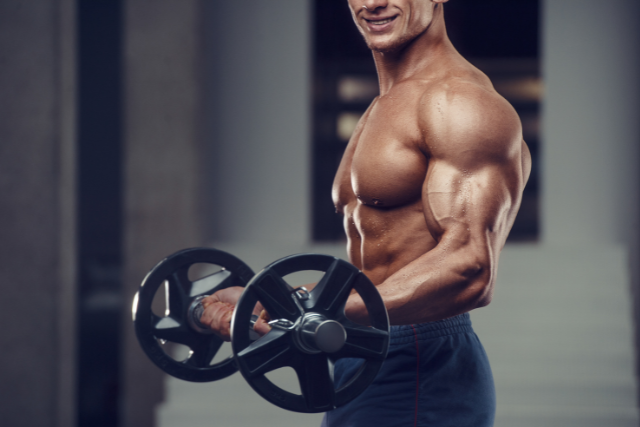
Generally, "muscle pump" is gym slang for the temporary swelling and tightness your muscles get while working out. It comes from extra blood and fluid in the working muscle, not new muscle tissue, so it is short-lived.
Why do we get muscle pumps? The straight answer is your increased blood flow to the muscle fibers you’re working on.
Muscle pump is the outcome of muscle contractions and blood flow.
Remember, as you work out, your muscle fibers will start contracting to move the weight. The muscle contraction, in turn, applies pressure on your blood vessels and restricts the amount of blood moving back to your heart.
Fortunately, the arteries are unaffected, so they continue supplying blood faster than your other blood vessels send to the heart, resulting in a muscle pump.
After all, while doing resistance training or an intense workout, your body will increase blood flow to the muscles.
Some lifters also use blood flow restriction (BFR) training, which partially limits blood flow in the working arm or leg with a cuff or band while lifting light weights.
The cuff goes around the upper part of the arm or thigh. Tighter is not better: research uses partial pressure, about 40-80% of the pressure that would fully stop arterial blood flow, with loads of about 20-40% of your one-rep max, per a 2019 review in Frontiers in Physiology.
Too much pressure raises the risk of numbness, fainting, and, rarely, serious muscle breakdown (rhabdomyolysis). Learn BFR from a qualified coach or physical therapist, and skip it if you have blood clotting, circulation, or heart problems unless your doctor approves.
During exercise, your breathing and heart rate increase to deliver more oxygen-rich blood to your working muscles.
How Long Does a Pump Last After Working Out?
Well, a muscle pump can't last for an entire day. Most of it fades within a few hours after you stop training, often sooner, as blood flow returns to normal. There is little research pinning down an exact time, and it varies from person to person.
To get a good pump, start with a warm-up, mix compound exercises with isolation exercises, and finish with a cool-down. Most importantly, stay hydrated while working out.
Drink water before and during your workout so you start training well hydrated.
Being dehydrated makes a pump harder to get. Some of the factors that can affect the duration of your pumped muscles include:
1. The Amount of Carbs Consumed
Eating enough carbs can help your muscles look and feel fuller. Besides powering you through a workout, carbs are stored in muscle as glycogen, which holds water.
This is why bodybuilders often eat extra carbs before a show: it makes their muscles look fuller for a few hours, without adding actual muscle tissue.
2. Your Body’s Hydration Level
Generally, dehydration can make it hard for you to work out, leave alone, and build some muscles. In fact, you’ll struggle to get a full pump, and if you do develop a pump, it won’t last longer. Therefore, you need to be properly hydrated to maintain a pump.
Taking something like a carbohydrate and protein drink or Gatorade while working out can come in handy when it comes to staying hydrated and maintaining the pump.
3. Type of Exercise
Other than staying hydrated and taking carbs, your workout type matters a lot. To get a strong pump, use moderate-to-high reps taken close to fatigue. Make sure you maintain a short resting period between the workout periods.
On top of that, the weight you’re using for compound exercises doesn’t have to be heavy; in fact, body-weight exercises can work perfectly. But make sure you use isolation exercises when pushing your muscles to fatigue. Several rounds of 15-20 reps of rows, dips, and triceps extensions (or as many pull-ups as you can manage) do the trick for me.
Why Doesn’t the Pump Last Longer?
As aforementioned, blood moves to where it’s required the most. Therefore, your blood will move to the muscles being worked during your workout. But after you have finished your isolation exercises, the blood will move to other organs.
For instance, when working your biceps, your blood will fuel them with oxygen while you’re working out. And once you’re done, it will be diverted to other crucial body organs.
Why Do I Always Lose the Pump Fast?
The main reason why your pump rarely last, even after working out for over an hour, is how you train and eat. Generally, if you're undereating or low on carbs, your pump will be weaker.
Secondly, certain exercises are not conducive, especially when you plan on getting a pump. For instance, circuit training spreads the work across many muscles, and heavy, low-rep compound lifts don't focus blood flow on one muscle the way higher-rep isolation work does.
For maximum pump you should try using bodybuilding style workouts for the maximum pump. Now that we know how to get a muscle pump, we need to find out how to make the pump last after working out and making it last.
How Can I Make My Muscle Pump Last Longer?
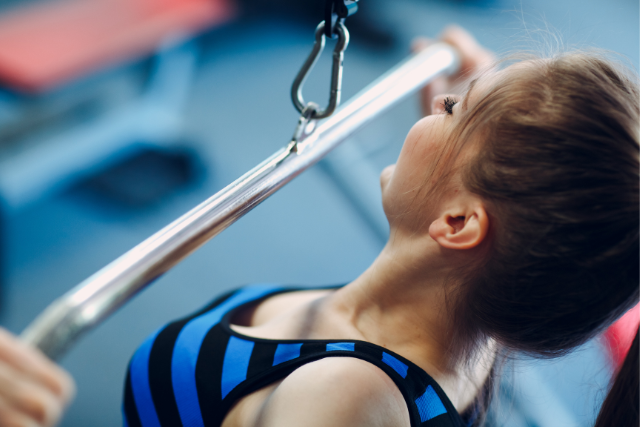
Even though it's temporary, you can get a stronger pump and help it stick around a bit longer in several ways. Sure, a pump can be temporary, but it can help boost your morale, and the more you maintain it, the more motivated you’ll be. For your pump to last longer, you should do the following:
1. Incorporate Isolation Exercises
Generally, compound exercises like deadlifts and the snatch build strength, but they're not ideal for building a muscle pump. So if you want a bigger pump, add isolation exercises like kickbacks, extensions, flies, and curls.
These workouts are designed to focus on certain groups of muscles at a time. And if done correctly, you will develop a perfect pump that’ll last.
2. Do More Reps and Sets of Isolation Workouts.
To get a bigger pump, you need to do more work. So instead of doing 3 sets of 10 reps, you can try 4 sets of 25 reps or 5 sets of 12 reps. Doing more will give you a better chance of your pump lasting longer than natural.
3. Vary Your Workout Selections.
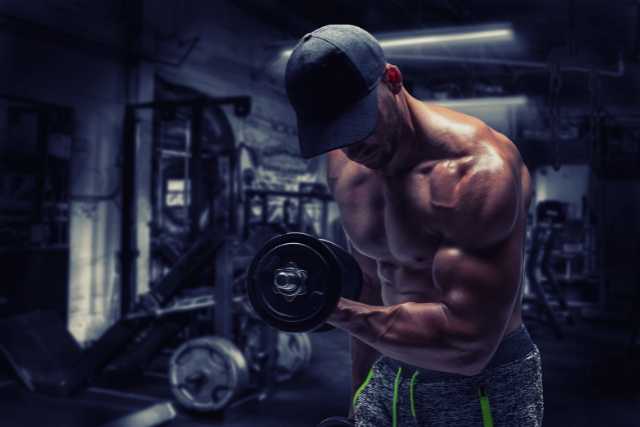
Instead of following your usual routine, you can make some small changes for long-lasting pumps. For instance, if you love standing barbell curls and have been doing it for a few months, you can try changing to a preacher curl. You can alternate it with dumbbell curls for several weeks for better results.
Generally, there are no ideal workouts that can help you achieve a pump. Therefore, the bests option is to alternate your routine with some unique workouts that you have never tried before.
4. Increase the Pace of Your Routine.
Instead of taking long resting periods between sets, you can incorporate shorter resting periods. Resting around 30-60 seconds between sets of isolation exercises keeps more blood and fluid in the working muscle, giving you a bigger pump.
5. Use Drop Sets
Drop sets can be an exceptional way to extend your set by adding reps while reducing the weight. For instance, start with a weight you can lift for about 10-12 reps. When you start feeling tired, you can lower the weight and increase the reps for more effect.
This will help you do more sets until you exhaust your muscles. Do this with isolation workouts and repeat the process.
6. Use Supersets
Another technique that can earn you a long-lasting pump is the supersets. Basically, a superset is when you do different workouts with no rest. You can do a set of triceps pushdowns followed by another set of bicep curls before returning to pushdowns and then repeat the sets while increasing the number of reps.
With supersets, your biceps will be resting while working on the triceps. Luckily, the resting period is minimal, resulting in a huge pump.
7. Don’t Cheat When Lifting Weights.
The most effective method of getting a pump is by doing isolation workouts. But if you keep on cheating or bouncing through your movements, your pump will be non-existent or short-lived. You should also avoid using your hips and legs to cheat.
For long-lasting pumps, you should slow down your reps and make sure you do them correctly.
8. Maintain Tension While Working Out.
Another reliable way to get your pump to last is by creating tension throughout your exercise. Basically, this means focusing more on the concentric as much as you do on the eccentric part of your workout.
When bench pressing, you should create tension by lowering the weight slowly instead of bouncing the barbell on your chest. Creating more tension while working out can result in exceptionally pumped muscles.
9. Skip Cold Tub
Ice baths and cold showers are popular these days, but regular cold-water immersion right after lifting may blunt some of your workout's muscle-building response.
In one study, the cold water bath after resistance exercise blunted and delayed the usual rise in testosterone and other signals linked to muscle growth.
Cold also narrows blood vessels in your skin and limbs, which ends a pump faster. If muscle growth is your main goal, save ice baths for times when quick recovery matters more, such as between competitions.
10. Take Muscle Pumping Supplements
Did you know that there are supplements for improving your pump?
Creatine monohydrate, one of the best-studied supplements, can help you do more work across sets, which supports strength and muscle gains over time. The usual maintenance dose is 3-5 grams a day, according to the International Society of Sports Nutrition position stand.
There are lots of supplements that can improve your pump, so when picking the best option, you should watch out for these ingredients:
- Betaine: Some studies suggest small performance benefits, but results are mixed and it has no proven effect on the pump.
- Arginine and citrulline: these are marketed to raise nitric oxide and blood flow. Oral arginine shows little benefit in healthy people; citrulline has somewhat better but still modest evidence.
11. Include Nitric Oxide-Boosting Foods in Your Diet Plan
Nitric oxide helps widen blood vessels. Your body can make it from dietary nitrate, found in foods such as arugula, spinach, and beets. These foods are healthy choices, though their effect on the pump is likely modest.
Will a Pump Help My Veins Show?
Generally, a pump will help your vein show in certain areas since it will increase blood flow in certain parts of your body. But for them to remain visible, your body fat percentage has to be low.
Veins tend to show more at lower body fat levels, which vary from person to person. Very low body fat isn't necessary or healthy for everyone, so don't chase visible veins at the expense of your health.
Does Getting a Pump Means That You’re Gaining Muscle Mass?
Well, does muscle pump mean muscle growth? It’s crucial to acknowledge that there are lots of factors that determine muscle growth. The main drivers of hypertrophy are progressive training close to fatigue, enough total sets, and enough protein. Researchers have proposed that the cell swelling behind a pump may add to growth, but that idea is not proven.
So a pump means you've worked a muscle hard, but it is not proof that you're gaining muscle. A sensible strategy is to start with heavier compound lifts, then finish with lighter, higher-rep work that also gives you a pump.
You can also finish with some high-rep isolation workouts and short resting periods for better results.
Conclusion
Pumps are a favorite of bodybuilders and a satisfying sign of a hard workout, but they are not a direct measure of muscle growth. Therefore, most of us do everything humanly possible to get a muscle pump while working. But for better effects, you should try alternating between compound and isolation workouts.
Unfortunately, muscle pumps are temporary and usually fade within a few hours. Staying hydrated, eating enough carbs, and using higher reps with short rests give you a stronger pump. You may also want to skip ice baths right after lifting if muscle growth is your goal.
A good pump is a sign you trained hard; steady progress over weeks and months is the real sign your muscles are growing.
Frequently Asked Questions
Why does my muscle stop feeling pumped after a few hours?
Generally, our muscles get pumped after working out thanks to the extra blood and fluid pushed into them. Once you stop training, your muscles no longer need that extra blood flow, so the fluid shifts back out and the pump fades.
Are daily workouts necessary for muscle pumps?
No. You can get a pump in any workout. For muscle growth, training each muscle group at least twice a week works well, and rest days help you recover. If you train daily, rotate muscle groups and don't overdo it.
Should I continue working out even after I start feeling sore?
Lifting heavy weights can help you build some muscles, but once you start feeling sore, then you should opt for lighter workouts instead of intense exercises. Lifting lighter weight will give your muscles time to recover. You can relieve the tension by doing things like swimming and walking.
Sources
- Blood Flow Restriction Exercise: Considerations of Methodology, Application, and Safety, Frontiers in Physiology (PMC)
- International Society of Sports Nutrition position stand: safety and efficacy of creatine supplementation in exercise, sport, and medicine, Journal of the International Society of Sports Nutrition (PMC)
- The effects of traditional, superset, and tri-set resistance training structures on perceived intensity and physiological responses, European Journal of Applied Physiology (PMC)